
Tankless vs. Traditional Water Heaters: Which Works Best for Your Denver Home?
Choosing between a tankless (on-demand) water heater and a traditional storage-tank model is one of the most important comfort decisions you’ll make as a homeowner. The right choice depends on:
- How much hot water your family uses
- Whether you care more about upfront cost or long-term savings
- Denver-specific factors like colder inlet water, water hardness, and local codes
This guide explains how each type works, compares costs and performance, and highlights what matters most for Denver homes. As a local provider of HVAC Services in Denver, Comfy Cave Heating & Air has helped many homeowners make this exact choice.
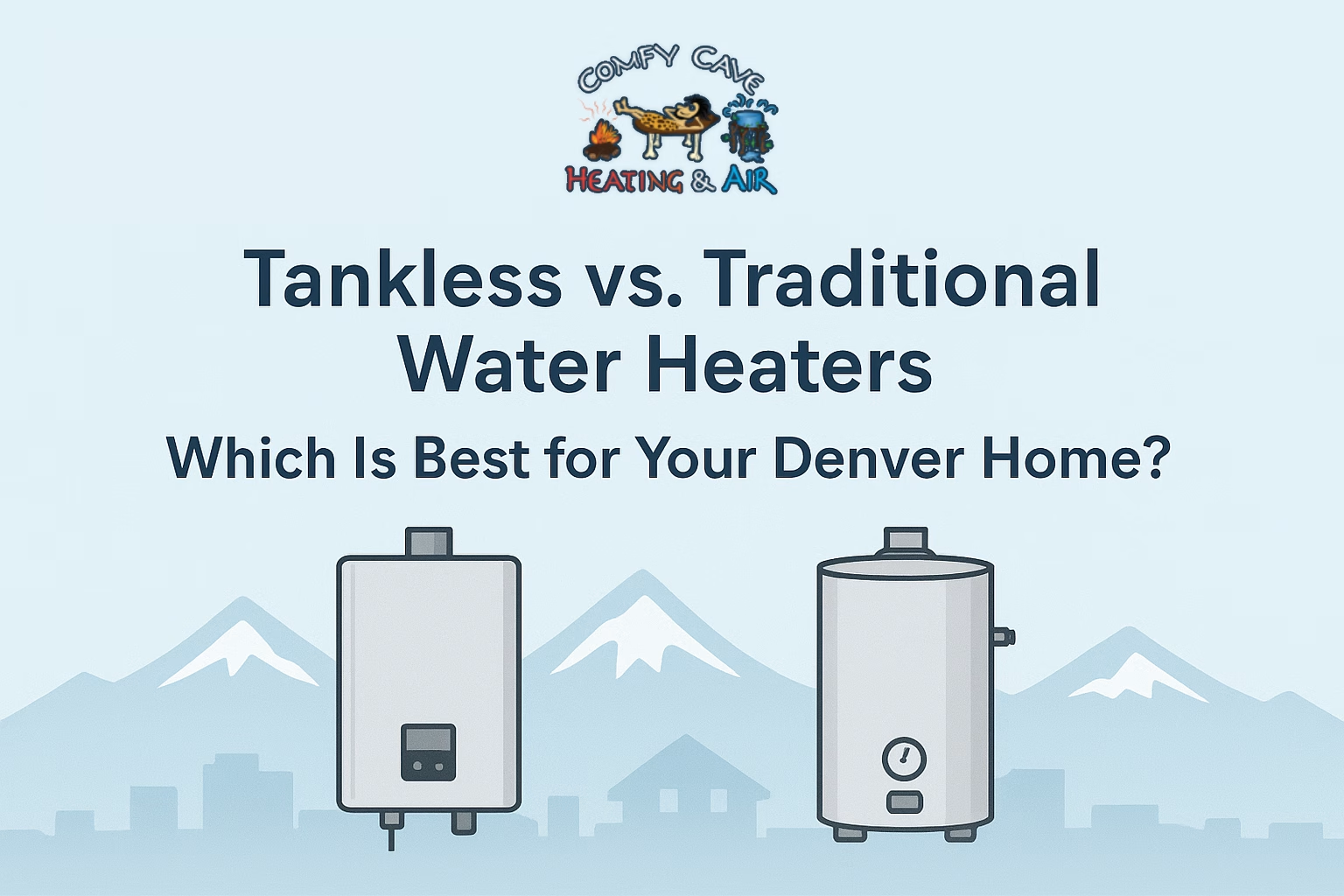
How Traditional Storage-Tank Water Heaters Work
Traditional storage-tank water heaters heat and store a set amount of water—typically 40–80 gallons—so it’s ready whenever someone turns on a hot-water tap.
Key components:
- Insulated tank that stores heated water
- Gas burner or electric elements to heat the water
- Thermostat to maintain your set temperature
- Anode rod that helps protect the tank from internal corrosion
- Safety devices, like a pressure-relief valve and proper venting
When the thermostat senses the water temperature has dropped, the burner or element kicks on to reheat the tank. Because hot water sits in the tank all day, some heat escapes through the walls—this is called standby heat loss and it increases energy use over time.
Pros and Cons of Traditional Water Heaters
Advantages of storage-tank units:
- Lower upfront cost than tankless
- Simple replacement when an old tank fails
- Strong short-term flow for multiple fixtures running at once
- Widely available models and parts
Drawbacks:
- Standby heat loss drives up energy bills
- Shorter lifespan, often 8–12 years with proper maintenance
- Require floor space and clearances
- You can “run out” of hot water if demand exceeds tank capacity
For Denver homeowners who want a straightforward, budget-friendly option and don’t mind replacing equipment a bit more often, a storage tank can still be a solid choice.
How Tankless Water Heaters Work
Tankless water heaters do not store hot water. Instead, they heat water only when you turn on a tap.
How the process works:
- You open a hot-water tap or start a shower.
- A flow sensor inside the unit detects water movement.
- The burner or electric elements turn on and heat the water as it passes through the heat exchanger.
- Hot water flows out to your fixtures—no storage tank required.
Tankless units are rated by gallons per minute (GPM) at a specific temperature rise. In Denver, colder winter inlet water means the unit has to work harder, so realistic GPM is often lower in winter. Proper sizing is critical.
Pros and Cons of Tankless Water Heaters
Advantages of tankless systems:
- Higher efficiency potential because there’s no standby heat loss
- Continuous hot water as long as you stay within the unit’s GPM capacity
- Compact, wall-mounted design that frees up floor space
- Longer lifespan than most tanks—often 20+ years with good maintenance
Drawbacks:
- Higher upfront cost for the unit and installation
- May require upgraded gas lines, venting, or electrical work
- Limited GPM means the unit can struggle if too many fixtures run at once
- More sensitive to cold inlet temperatures, which is a real factor in Denver
For many Denver homes with moderate hot-water use and an eye on long-term savings, tankless systems can offer excellent value—especially when professionally sized for local conditions.
Energy Efficiency and Operating Costs
One of the biggest reasons homeowners consider going tankless is efficiency.
Traditional storage-tank systems:
- Heat water and keep it hot around the clock
- Lose energy to standby heat loss, even when you’re not using hot water
Tankless systems:
- Heat water only when you need it
- Avoid standby losses and can reduce energy use, often in the range of 10–30%, depending on usage patterns
In general:
- Light-to-moderate hot-water use → tankless often saves more
- Very heavy, constant use → efficiency differences may be smaller, but tankless can still shine thanks to longer lifespan
Utility rates in the Denver area, your household size, and your usage habits will all influence the actual dollar amount you save.
Installation Cost and Lifespan
While exact pricing varies by home, some general trends hold true.
Storage-tank water heaters:
- Lower upfront unit cost
- Less complex installation, especially for simple replacements
- Lifespan typically 8–12 years
Tankless water heaters:
- Higher unit cost (especially for high-efficiency or condensing models)
- Installation may require upgraded venting, gas lines, or electrical capacity
- Lifespan often 20+ years with proper maintenance
When you spread cost over the full life of the unit, tankless systems often close the gap—or even come out ahead—especially if you factor in energy savings and fewer full replacements.
Capacity, Performance, and Space
Traditional storage tanks
- Measured in gallons (40, 50, 60, 80, etc.)
- Provide strong short-term performance until the stored hot water is used up
- Best for homes with predictable, heavy morning or evening peaks
- Require a dedicated floor space location with proper clearances
Tankless systems
- Measured in GPM at a given temperature rise
- Can provide continuous hot water within their capacity
- Excellent for homeowners who value space savings and on-demand hot water
- Must be sized correctly to handle your peak simultaneous usage—for example, two showers plus a dishwasher in Denver’s colder months
If your family routinely runs several showers and appliances at once, a larger tank, a high-capacity tankless, or a multi-unit tankless setup may be recommended.
Maintenance and Denver Water Quality
Denver’s water hardness and cold winters affect both tank and tankless systems.
For storage tanks:
- Annual flushing helps remove sediment that reduces efficiency and shortens tank life
- Anode-rod inspection and replacement prevents premature corrosion
- Regular checks of pressure-relief valves and venting support safety and performance
For tankless systems:
- Descaling the heat exchanger every 6–12 months is important in hard-water areas
- Cleaning inlet filters helps maintain good flow and prevent errors
- Venting and combustion air paths should be inspected regularly
If your water is particularly hard, adding a water softener or scale-mitigation system can significantly extend the life and performance of either type of heater.
Denver-Specific Factors That Affect Your Choice
Several local factors can tip the scales toward tankless, traditional, or a hybrid approach:
- Cold inlet temperatures:Denver’s cold winters reduce tankless GPM and increase the energy load for any system. Tankless units must be sized for worst-case winter conditions.
- Altitude:Can influence gas combustion and equipment selection, making local expertise important.
- Water hardness:Increases scale buildup risk, which can lower efficiency and shorten lifespan if not managed.
- Permits and code:Many water-heater installations or replacements require permits and must follow updated plumbing and venting codes.
- Rebates and incentives:High-efficiency equipment, including condensing tankless units, may qualify for utility or state rebates that improve the overall payback.
A local contractor who understands Denver’s conditions can help you sort through these variables, rather than guessing based on generic online advice.
How Comfy Cave Heating & Air Helps Denver Homeowners Decide
Every home is different, and there’s no one-size-fits-all answer—especially in a city with Denver’s climate and code requirements. That’s where Comfy Cave Heating & Air comes in.
Here’s how we help:
- Personalized sizing and system selectionbased on your family’s real hot-water usage
- Evaluation of existing gas lines, electrical service, and venting to avoid surprises
- Permit-ready installation plans that meet Denver’s current codes
- Guidance on available rebates and incentives
- Flexible financing options to spread upfront costs over time
- Ongoing maintenance and 24/7 emergency service
If you’re leaning toward tankless, Comfy Cave offers professional Tankless Water Heater Services in Denverto help you choose, install, and maintain the right system for your home.
Conclusion
Both tankless and traditional water heaters can work well in Denver—what matters most is choosing the system that fits your home, budget, and long-term plans.
Traditional tanks are usually more affordable upfront and easier to replace quickly, while tankless systems can provide better efficiency, more space, and a longer lifespan when sized and installed properly.
If you’d like expert, local guidance instead of guessing, the team at Comfy Cave Heating & Airis here to help. As a trusted provider of HVAC Services in Denver, we’ll walk you through your options, explain trade-offs in plain language, and design a permit-ready solution that keeps your showers hot and your energy use under control.a
Frequently Asked Questions
Is a tankless water heater worth it for Denver homes?
Yes, for many Denver homes a tankless system can be worth it, especially if you want long-term energy savings and plan to stay in your home. It’s most effective when properly sized for your household’s peak demand and Denver’s colder winter inlet temperatures.
How long do tankless vs. traditional water heaters last?
Traditional storage tanks typically last 8–12 years, while tankless units often reach 20+ years with regular maintenance. Water quality, usage, and whether you keep up with flushing or descaling make a big difference.
How much does it cost to install a water heater in Denver?
Tank-style replacements usually cost less up front than tankless installations. Tankless systems are more expensive initially because of the unit price and potential upgrades to gas lines, venting, or electrical service. A local, permit-ready estimate is the best way to see real costs for your home.
Which type of water heater is best for a family of four in Denver?
Both can work well when properly sized. A 50–80 gallon storage tank or a 6–10 GPM tankless system (or multiple units for very high demand) might be recommended for a family of four, depending on how often you run showers and appliances at the same time.
How do I size a tankless water heater for my home?
Estimate how many fixtures could run at once and add up their flow rates in GPM, then factor in the temperature rise needed from Denver’s cold winter inlet water to your desired hot-water temperature. A professional sizing visit helps make sure you don’t end up with lukewarm showers during busy times.
Are there maintenance differences between tankless and traditional water heaters?
Yes. Tanks need annual flushing and periodic anode-rod checks, while tankless units need regular descaling and filter cleaning, especially in hard-water areas. A simple yearly or semi-annual maintenance plan keeps either system running efficiently and lasting longer.