Does Hail Damage Your AC Unit? What Denver Homeowners Should Check After June’s Storms
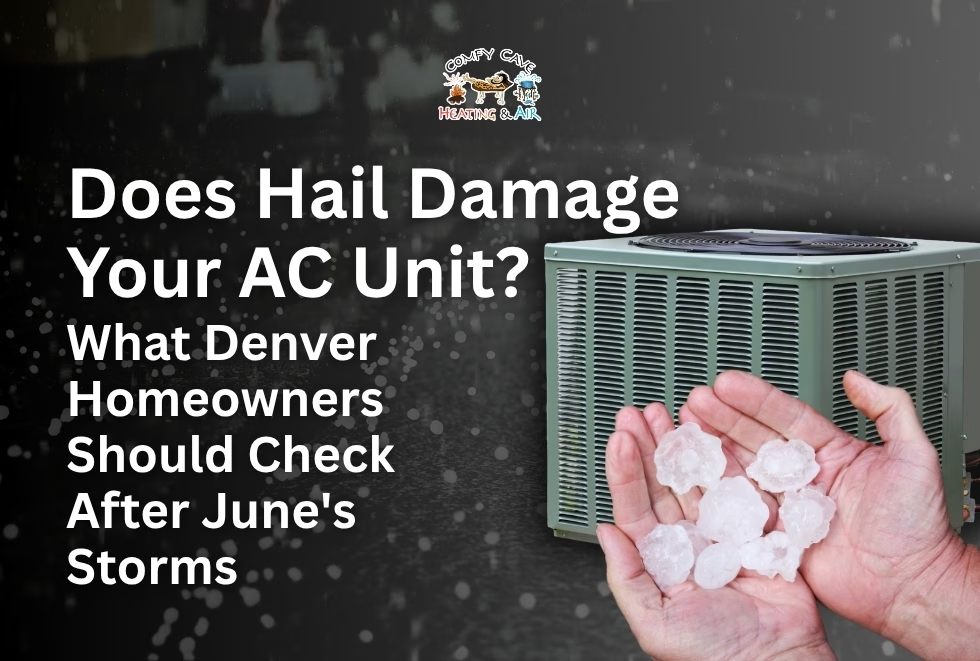
When hail moves through the Front Range, most homeowners go straight to checking the roof and the car. The outdoor half of the air conditioner, the condenser sitting in the side yard or behind the house gets forgotten almost every time, even though it sits just as exposed to the sky as the roof does, with far less material protecting its working parts.
How Hail Actually Damages an AC Unit
The outdoor condenser is built around a coil wrapped in thin aluminum fins. Those fins aren’t cosmetic, they’re the surface area that lets the refrigerant inside the coil release the heat it picked up from your home. Aluminum fins are soft on purpose, thin enough to conduct heat efficiently, which also makes them the first thing to deform on impact. Hail bends and flattens the fins, closing the small gaps air is supposed to pass through. Once that happens, the coil can’t shed heat as efficiently, the system runs longer to do the same job, and the compressor works harder than it’s designed to for extended stretches.
Larger hail or a direct hit near the top of the unit can go beyond the fins. The fan blade can get knocked out of balance, the protective grille over the fan can crack, and a cracked grille leaves the electrical compartment underneath exposed to wind-driven rain during the next storm, a separate problem layered on top of the original one.
How Much Hail Does It Actually Take?
Pea-sized hail is rarely enough to dent anything. Once stones reach roughly dime to marble size, fin damage becomes realistic, especially if the hail comes in at an angle and hits the same side of the unit repeatedly during a longer storm. Golf-ball-sized hail and larger the size reported in several Front Range storms this season routinely causes fin damage that’s visible from a few feet away, and can be enough to crack plastic housings and grilles outright.
Signs Your Outdoor Unit Took a Hit
- Visible dents, dimples, or flattened patches across the fins or top grille
- Noticeably weaker airflow coming from your vents
- The system running longer than usual to reach the temperature on the thermostat
- New rattling, buzzing, or vibration when the unit cycles on often a sign the fan blade took a hit
- A rise in your cooling bill with no other obvious explanation
The deceptive part is timing. A unit can look only lightly marked and keep running for weeks before the lost efficiency becomes obvious, usually on the hottest day of summer, which is the worst possible time to discover it.
Should You Run the AC Right After a Hailstorm?
If you suspect a direct hit, it’s worth holding off on running the system hard until it’s been looked at. A unit with compromised airflow can still turn on and seem to work, but operating it under full load while compromised adds stress to a compressor that may already be running outside its normal parameters.
Documenting Damage for an Insurance Claim
Take dated photos of any visible dents as soon as it’s safe to do so, ideally with a coin or a ruler placed next to a hailstone before it melts, ground-level hail size is some of the most persuasive evidence in a contested claim. Most Colorado homeowner policies that cover hail damage to a roof extend to outdoor HVAC equipment as well, but filing windows, deductibles, and exact terms vary by insurer. Many Colorado policies require a claim to be filed within roughly a year of the date of loss, so it’s worth confirming your specific policy’s window directly with your insurance company rather than assuming you have unlimited time.
- Photograph the unit and any hailstones for scale, and write down the exact storm date.
- Have a licensed technician inspect the unit independently, before or alongside any adjuster visit, so you have your own documentation of the damage.
- Open the claim with your insurer, providing the date of loss and your inspection findings.
- Review the adjuster’s scope of loss line by line once it comes back; a full Colorado hail claim typically runs somewhere between 30 and 90 days from inspection to settlement.
The Fin-Combing vs. Replacement Debate
This is the part many homeowners never see coming. Some insurers will recommend a fin comb-out, a tool that straightens bent fins back into rough alignment rather than a coil or unit replacement. Combining restores the general shape of the fins, but it doesn’t restore the coil to its original efficiency, and a unit that’s been combed often runs measurably less efficiently than it did before the storm, even though it looks fixed. If your insurer pushes for a comb-out, it’s reasonable to ask your own technician for a written efficiency assessment to support requesting a different resolution.
A Word of Caution About Storm-Chasing Contractors
Every significant hailstorm on the Front Range brings out-of-town crews knocking on doors within days, offering free inspections and fast repairs. Some are legitimate; many disappear before the work is finished or the warranty means anything. A simple way to filter them: ask for a local address and a license number, and be cautious of anyone who offers to cover or waive your insurance deductible outright Colorado law generally does not allow that practice, and an offer to do it anyway is a reliable red flag, not a perk.
When to Have It Checked
If a storm came through your block recently, scheduling an inspection through Comfy Cave’s cooling services is worth doing before the next heat wave rather than after a breakdown. It pairs well with a broader look at system health our AC Tune-Up Checklist for Denver Homeowners covers what a full seasonal check typically includes, and our guide to Signs Your Denver Home’s AC Needs Replacing Before Summer is worth a read if the inspection turns up damage severe enough to make replacement the more sensible option.
Comfy Cave Heating & Air has served Arvada and the greater Denver Metro area for more than 18 years, with licensed, certified technicians and free in-home estimates.
Frequently Asked Questions
Can a small amount of hail damage actually hurt my AC's performance?
Yes. Even fins that look only slightly bent reduce the surface area available for heat exchange, which means the system runs longer and less efficiently to do the same job, even when it never fully breaks down.
Will my homeowner's insurance cover AC hail damage?
Many policies that cover roof hail damage extend to outdoor HVAC equipment, but the specifics depend on your insurer and policy. Confirm your coverage and filing deadline directly with your insurance company.
Should I accept a fine comb-out if my insurer recommends one?
It depends on how severe the damage is. A comb-out restores shape but not full original efficiency. If you’re unsure, an independent assessment from a licensed technician gives you something concrete to bring back to the conversation.
How soon after a storm should I have my AC inspected?
Within a few days, and before running the system heavily. Catching fin damage early, before weeks of normal summer use compound it, usually means a simpler and less expensive fix.