
What Is a Whole-Home Dehumidifier and Does Denver Even Need One?
Denver has a reputation as one of the driest cities in the country. So when homeowners ask Comfy Cave Heating & Air about whole-home dehumidifiers, the question often comes with a skeptical look. Why would anyone need to remove moisture from the air in a place that’s already so dry?
It’s a fair question. And the answer is more nuanced than most people expect. Comfy Cave has been solving indoor comfort problems for Denver-area homeowners since 2006. Here’s a straight answer on whole-home dehumidifiers: what they are, when they make sense in Colorado, and when they probably don’t.
What Is a Whole-Home Dehumidifier?
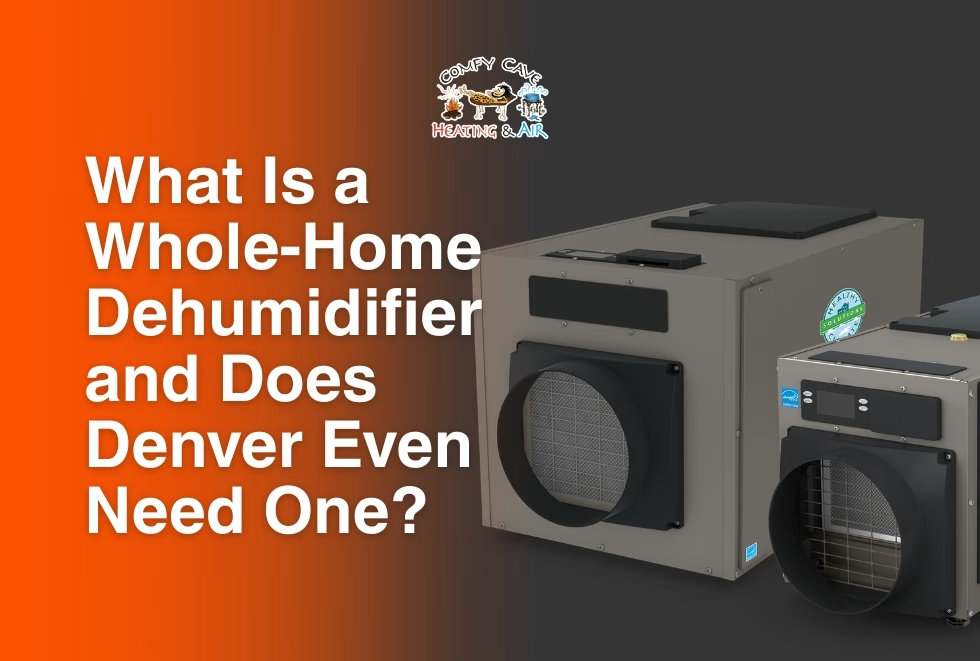
A whole-home dehumidifier integrates directly with an HVAC system and ductwork. As air circulates through the home, the dehumidifier draws it over a cold coil, which causes moisture to condense and drain away. The drier air is then returned to the living spaces.
Unlike portable dehumidifiers which require emptying, moving from room to room, and constant attention a whole-home unit runs automatically, drains to a floor drain or condensate line, and treats all the air in the home consistently. A target humidity level is set, and the system maintains it without ongoing involvement. These units are typically installed in the basement, utility room, or alongside the air handler integrated with the existing HVAC system, not separate from it.
The Case for Dry Denver: Why Many Homes Don’t Need One
Denver’s semi-arid climate means that low humidity is more often the complaint than high humidity. During most of fall, winter, and spring, the air is dry enough that homeowners run humidifiers to add moisture not remove it. If that describes the situation year-round, a whole-home dehumidifier is not the right investment. There are better places to put that money.
But Denver’s humidity story doesn’t end there.
When Denver Homes Do Have a Humidity Problem
Monsoon Season
Every summer, from roughly July through mid-September, Colorado experiences its monsoon pattern. Moisture flows up from the south, and relative humidity in Denver can climb from the typical 20–30% range up to 60–80% sometimes higher during storm events. For homes without central air conditioning, this period can create genuinely uncomfortable, sticky conditions indoors. And for homes where moisture can accumulate particularly in basements this is the window when humidity-related problems tend to develop.
Basements
This is the most common scenario where Comfy Cave Heating & Air recommends dehumidification. Basements are naturally cooler than the rest of the house, and warm, humid summer air when it infiltrates a basement loses heat when it contacts those cooler surfaces. That causes moisture to condense on walls, floors, and stored belongings.
The result over time: musty smells, mold and mildew growth, efflorescence (white mineral deposits on concrete), and gradual deterioration of anything stored there. A finished basement with an unaddressed moisture problem will eventually show it in drywall, flooring, and framing.
Newer, Tightly Built Homes
Modern construction has produced homes that are significantly more airtight than older builds. That’s good for energy efficiency but means moisture generated inside the home from cooking, showering, breathing, and houseplants has fewer opportunities to escape. In these homes, even in Colorado’s dry climate, indoor humidity can creep up to uncomfortable or problematic levels.
Homes with Specific Moisture Sources
- Large households with many occupants
- Homes with indoor pools or hot tubs
- Crawl space moisture intrusion
- Plumbing leaks or past water damage that wasn’t fully remediated
What Happens If High Indoor Humidity Is Left Unaddressed?
Humidity above 50–60% sustained over time causes real, compounding problems:
- Mold and mildew growth — particularly in basements, bathrooms, and behind walls
- Dust mite proliferation — dust mites thrive in humid conditions, worsening allergies and asthma
- Wood damage — hardwood floors buckle, doors swell, and structural wood becomes susceptible to rot
- Reduced cooling effectiveness — high humidity makes a home feel warmer than the thermostat reads, which causes overcooling and higher electricity bills
- Musty odors — usually one of the first signs homeowners notice, and a reliable indicator of active mold or mildew
How a Whole-Home Dehumidifier Differs from Central AC
A central air conditioner does dehumidify as a byproduct of cooling as warm, humid air passes over the cold evaporator coil, moisture condenses out of it. This is one of the reasons proper sizing matters. Learn more about sizing and system options on Comfy Cave’s cooling services page.
But there are two important limitations to relying on AC alone for humidity control:
First, AC only runs when it’s cooling. On a mildly warm but humid day, or during shoulder seasons when temperatures don’t call for cooling, the system may not run enough to control indoor humidity.
Second, AC is sized for cooling load, not dehumidification capacity. If a home’s moisture load is high, the AC may not remove enough moisture even when running regularly.
A dedicated whole-home dehumidifier fills these gaps. It operates independently of the cooling system and runs specifically to maintain the target humidity level regardless of thermostat setting. Comfy Cave’s indoor air quality solutions page covers the full range of products available, and how they work alongside a complete HVAC system.
What Size Dehumidifier Does a Denver Home Need?
Sizing is based on the square footage being treated and the severity of the moisture problem. Capacity is measured in pints of moisture removed per day residential whole-home units typically range from 70 to 130+ pints per day.
This isn’t something to guess at. An undersized unit runs constantly and still doesn’t solve the problem. An oversized unit is unnecessarily expensive. A proper in-home assessment is the right starting point. If a maintenance plan is already being considered for the HVAC system, that’s a natural time to evaluate whether dehumidification belongs in the home comfort setup.
So Does a Denver Home Need a Whole-Home Dehumidifier?
Probably not — if the home feels comfortable through summer, there’s no basement with moisture issues, and none of the warning signs above apply.
Worth a serious look — if the basement gets musty in summer, if the home feels sticky and uncomfortable during monsoon season, if allergy or asthma symptoms worsen in summer, or if it’s a tightly built home that retains interior moisture.
Likely necessary — if there’s visible mold, persistent musty odors, condensation on walls or windows in summer, or hardwood floors that are buckling or showing moisture damage.
None of this has to be a guessing game. Comfy Cave Heating & Air can assess actual humidity levels in the home, identify the source of the problem, and give a clear recommendation on whether a whole-home dehumidifier makes sense and if so, what type and size.
Call Comfy Cave Heating & Air at 303-645-4889 or contact the team online to schedule an assessment. Serving Arvada, Denver, Lakewood, Westminster, Littleton, and the greater Denver metro area.