
Central AC vs Mini-Split: Which Is Better for a Denver Home?
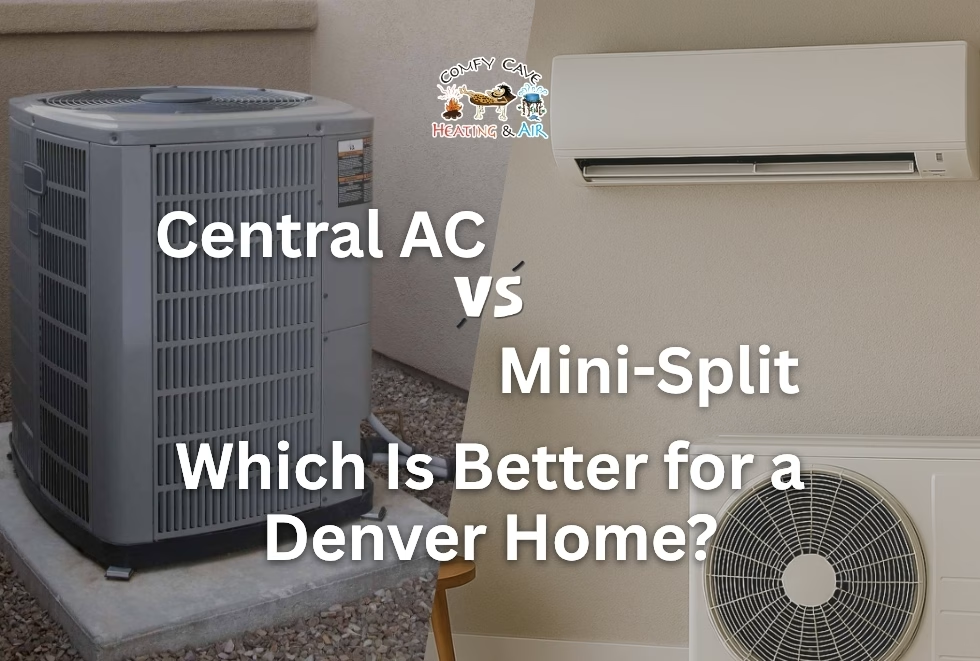
If you’re shopping for a new cooling system in Denver, you’ve probably run into this question: central air conditioning or a ductless mini-split? Both can cool your home effectively. Both have real advantages. And both have situations where they’re clearly the wrong choice. The problem is that most comparisons you’ll find online are written for a generic American home — not for a Denver home at 5,280 feet with Colorado’s specific climate, construction styles, and seasonal demands.
This guide breaks it down honestly, so you can make the right call for your specific situation.
How Each System Works
Central air conditioning uses a single outdoor condenser unit connected to an indoor air handler and a network of ducts throughout your home. The system cools air centrally and distributes it through those ducts to every room via vents. It requires existing ductwork, or the installation of new ductwork if your home doesn’t have it.
A ductless mini-split has the same outdoor condenser concept, but instead of ducts, it connects directly to one or more indoor air-handling units mounted in individual rooms or zones. Each indoor unit can be controlled independently. No ductwork required.
When Central AC Is the Right Choice for Your Denver Home
Central air makes sense when:
- Your home already has ductwork in good condition — installing central AC in an existing ducted home is straightforward and cost-effective
- You want whole-home, consistent cooling from a single system with one thermostat
- Your home is larger (typically 2,000+ sq ft) — central AC systems are generally more cost-effective at scale
- You prefer a less visible system — there are no wall-mounted units in each room
- Your budget is limited upfront — a standard central AC installation typically costs less than a full multi-zone mini-split system for a whole home
Denver-specific note: If your home was built before the 1980s and has older ductwork, have it inspected before assuming it’s usable. Old ducts in Denver homes often have significant leakage, which kills cooling efficiency at altitude where your system is already working harder than at sea level.
When a Mini-Split Is the Better Answer
A ductless mini-split wins when:
- Your home has no existing ductwork — adding ducts to an older Denver home is expensive and invasive; a mini-split avoids it entirely
- You’re cooling a specific area: an addition, a converted garage, a finished basement, or a bonus room that your central system doesn’t reach effectively
- You want room-by-room temperature control — different family members can set different temperatures in different zones without fighting over a single thermostat
- You want year-round heating and cooling from one system — mini-splits are heat pumps by nature, so they provide efficient heating in winter too
- Energy efficiency is a priority — mini-splits eliminate duct losses entirely, which can represent 20–30% of cooling energy in a typical ducted system
Denver-specific note: Mini-splits are excellent for Colorado’s dramatic temperature swings. Modern inverter-driven mini-splits modulate their output continuously rather than cycling on and off hard, which handles Denver’s day-night temperature variation more smoothly and reduces wear on the compressor.
Cost Comparison: What You’ll Actually Pay
Central AC Installation Cost in Denver
For a home with existing ductwork in good condition, expect to pay between $4,000 and $8,000 for a quality central AC installation, depending on system size, efficiency rating, and your specific home requirements. If ductwork needs significant repair or replacement, that cost increases substantially — duct replacement for a whole home can add $3,000 to $7,000 or more.
Mini-Split Installation Cost in Denver
A single-zone mini-split (one outdoor unit, one indoor unit) typically runs $2,500 to $5,000 installed. A multi-zone system cooling 3–4 rooms will run $6,000 to $12,000+ depending on the number of zones and system capacity.
Operating Cost Reality
Mini-splits generally win on operating cost due to eliminated duct losses and superior part-load efficiency. However, for a well-sealed, properly ducted home, a high-efficiency central AC system is competitive. The real cost advantage of mini-splits shows up most clearly in homes with poor ductwork or where you’re only cooling part of the house.
How Denver’s Climate Affects This Decision
A few Denver-specific factors that should influence your choice:
Altitude: Both systems need to be properly sized for Denver’s elevation. This matters more for central AC since mini-splits, particularly inverter-driven models, are more adaptable to altitude conditions. If you’re going central AC, insist on a proper load calculation that accounts for 5,280 feet.
Hail exposure: Both systems have an outdoor condenser unit exposed to Denver’s hail risk. Neither has a clear advantage here — both need to be protected and inspected after major hail events.
Dry climate: Denver’s low humidity means you’re cooling for temperature, not dehumidification. Both systems handle this well. If you ever do want humidity control added (during monsoon season, for example), central systems with a whole-home dehumidifier are easier to integrate.
Year-round use: If you need both heating and cooling, a mini-split heat pump system eliminates the need for a separate heating system in the zones it serves. Combined with our heat pump services in Denver, this can be a highly efficient solution for the right home.
Our Honest Recommendation Framework
Use this to guide your decision:
Choose central AC if: You have existing, well-sealed ductwork, you want whole-home cooling with one system, and your home is 1,500+ sq ft.
Choose a mini-split if: You have no ductwork, you’re cooling a specific zone or addition, you want independent room control, or you want one system for both heating and cooling.
Consider both if: You have a large home where central AC handles the main living areas and you add a mini-split for a problem area (finished basement, sunroom, attic conversion) that the central system doesn’t reach effectively. Hybrid setups are common and practical in Denver homes.
At Comfy Cave Heating & Air, we don’t push one system over the other. We look at your home, your ductwork (or lack of it), your budget, and your usage patterns — and we give you a straight recommendation. Our cooling installation services in Denver cover both central AC and ductless mini-splits, so we’re not incentivized to steer you toward one or the other.
Frequently Asked Questions
Can a mini-split cool my whole house in Denver?
Yes, with a multi-zone system. You’d have one outdoor unit connected to multiple indoor units, each cooling a different area of the home. For a 3–4 bedroom home, this is a viable whole-home solution, though the upfront cost is higher than a central AC system in an already-ducted home.
Do mini-splits work in Denver's cold winters?
Modern cold-climate mini-splits are rated to operate efficiently down to -15°F or lower. Denver’s winters are well within that range. Many of our customers use mini-splits as their primary year-round heating and cooling system.
How long do each system last?
A well-maintained central AC system typically lasts 15–20 years in Denver. A mini-split, with similar maintenance, has a comparable lifespan. Regular servicing extends both.
What's easier to maintain in Denver's climate?
Mini-splits have washable filters in each indoor unit, which is an advantage in Denver’s dusty environment. Central AC requires regular duct inspection and filter replacement. Both need annual professional maintenance — neither is truly ‘low maintenance’ in Denver’s demanding climate.
Which system qualifies for rebates in Colorado?
Both high-efficiency central AC and heat pump mini-splits can qualify for Xcel Energy rebates and federal tax credits through the Inflation Reduction Act, depending on the system’s efficiency rating. Visit our rebates page for current incentive information, or ask us during your estimate — we’ll help you identify what applies to your specific installation.